
Introduction to Metal Casting | Casting terms | Advantages and Disadvantages Of Casting
铸造是一个制造过程,通常将液体倒入模具中,其中包含所需形状的空心腔,然后允许凝固。固化部分也称为铸件,它被弹出或从模具中弹出以完成过程。

|
| 铸件的示例 |
Metal Casting is one of the oldest materialsshaping methods known. Casting means pouring molten metal into a mold with a cavity of the shape to be made, and allowing it to solidify. When solidified, the desired metal object is taken out from the mold either by breaking the mold or taking the mold apart. The solidified object is called the casting. By this process, intricate parts can be given strength and rigidity frequently not obtainable by any other manufacturing process. The mold, into which the metal is poured, is made of some heat resisting material. Sand is most often used as it resists the high temperature of the molten metal. Permanent molds of metal can also be used to cast products.
Casting Terms

|
| Casting Terms |
- Flask:形成模具的金属或木框,没有固定的顶部或底部。根据烧瓶在成型结构中的位置,它由诸如拖动 - 下部成型烧瓶,COPE - 上部成型瓶,脸颊 - 中间成型烧瓶等各种名称提及。
- 图案:It is the replica of the final object to be made. The mold cavity is made with the help of pattern.
- 分开行:This is the dividing line between the two molding flasks that makes up the mold.
- 型砂:Sand, which binds strongly without losing its permeability to air or gases. It is a mixture of silica sand, clay, and moisture in appropriate proportions.
- Facing sand:The small amount of carbonaceous material sprinkled on the inner surface of the mold cavity to give a better surface finish to the castings.
- Core:A separate part of the mold, made of sand and generally baked, which is used to create openings and various shaped cavities in the castings.
- 浇灌盆地:A small funnel shaped cavity at the top of the mold into which the molten metal is poured.
- SPRUE:The passage through which the molten metal, from the pouring basin, reaches the mold cavity. In many cases it controls the flow of metal into the mold.
- Runner:The channel through which the molten metal is carried from the sprue to the gate.
- Gate:A channel through which the molten metal enters the mold cavity.
- Chaplets:chaples用于支撑霉菌腔内的核心,以照顾其自身的重量并克服金属落压力。
- Riser:A column of molten metal placed in the mold to feed the castings as it shrinks and solidifies. Also known as “feed head”.
- 发泄:Small opening in the mold to facilitate escape of air and gases.
铸造的优势
The metal casting process is extensively used in manufacturing because of its many advantages.
- Molten material can flow into very small sections so that intricate shapes can be made by this process. As a result, many other operations, such as machining, forging, and welding, can be minimized or eliminated.
- 几乎可以施放任何黑色或非有色人种的材料。
- 由于可以精确地将金属放置在需要的位置,因此可以实现大量节省的重量。
- 铸造模具所需的必要工具非常简单且便宜。结果,对于一小部分的生产,这是理想的过程。
- There are certain parts made from metals and alloys that can only be processed this way.
- Size and weight of the product is not a limitation for the casting process.
铸造的局限性
- 通过砂铸造过程制造的铸件的尺寸精度和表面表面是该技术的限制。已经开发了许多新的铸造过程,可以考虑尺寸准确性和表面饰面的方面。其中一些过程包括铸造过程,投资铸造过程,真空密封的成型过程和壳体成型过程。
- The metal casting process is a labor intensive process
Related posts:
 What is Casting process | Advantages , Disadvantages and Application
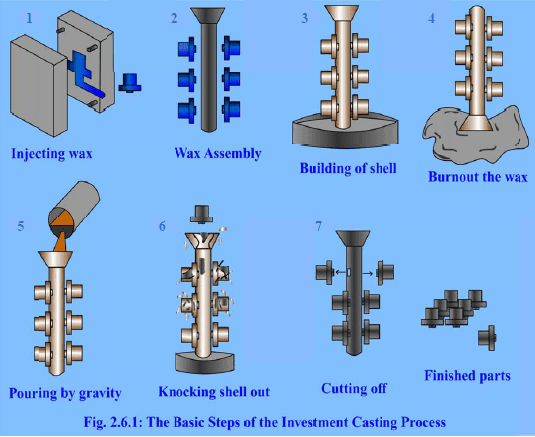 投资铸造过程的步骤|的优点和缺点
 Centrifugal Casting – Types, Working, Advantages, Disadvantages
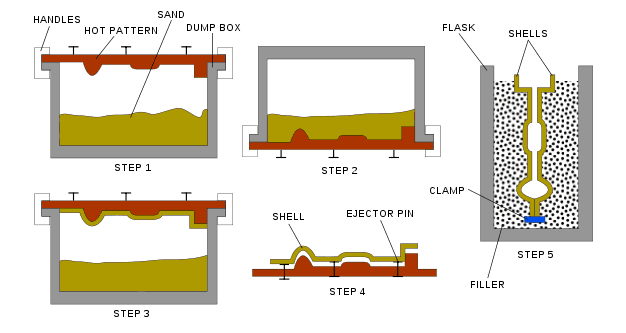 Shell Moulding – Steps , Advantages and Disadvantages
 失去蜡像 - 过程,优势和缺点
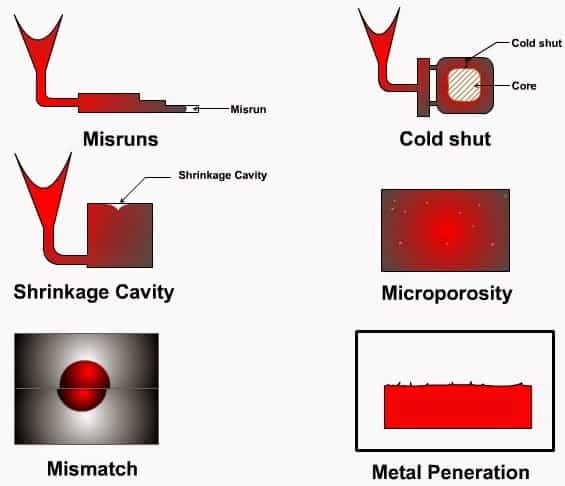 What are the Casting Defects ?
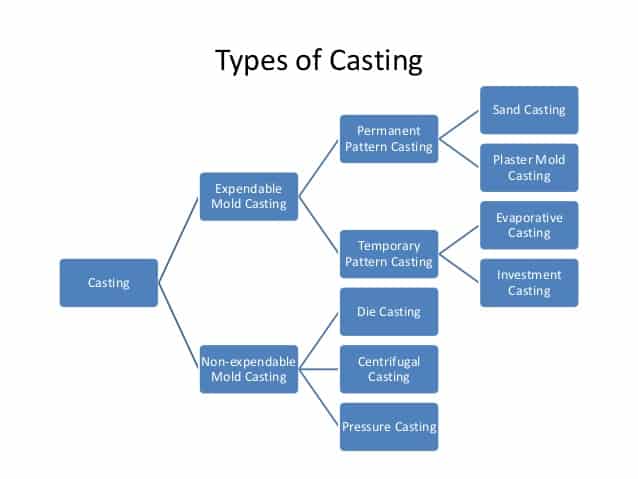 Types Of Casting Processes – Diagram, Working, Advantages
 Squeeze Casting Process – Advantages and Disadvantages